
• Passa alla navigazione primaria
  • Passa al contenuto principale
  • Passa alla barra laterale primaria
diario comune

diario comune

  • HOME
  • INTRO
  • BLOG
  • LETTERE
  • CONTATTI

Francisco Goya

“Spazieren in Berlin (Stroll through Berlin)” / text by Andrea Fogli / 12th berlin biennial for contemporary art / Hamburger Bahnhof / Francisco Goya / …

_____________
Settembre 12, 2022

.

            “Political” art in the West

.

Early in the morning I headed to the Hamburger Bahnhof, where there was also a large section of the 12th Berlin Biennale of contemporary art, and step by step in this former station transformed for years into a mega avant-garde exhibition venue I was able to touch the current “political” state of art.

Those who wander around the 13,000 square meters (!) in reality find nothing other than what we already know through the media and the internet, videos of bombings, the documentation of various critical issues of the Third World (poverty, racial or gender discrimination), and then the migratory problems, torture (including, well hidden, the well-known ones made in the USA, done at home or around the world) and so on. Beyond this, the first (artistic) problem is that these “politically correct” themes that populate the exhibition are largely translated into banal “objects” which – as such – do not arouse any real reaction or empathy: miniminalistic cages , cardboard coffins, a piece of reinforced concrete found in the rubble of the bombings, and a myriad of “journalistic” photos such as those that clog up media and smartphones and that we no longer see, addicted as we are to all kinds of media images. As “objects” (without pathos, apathetic) are also the various aesthetic formalizations that we find there almost everywhere, like the gyroscopic frieze of a slice of sky that we discover (from detailed information and statistics displayed there) to be the Lebanese one crossed by raids Israelis, or the room with the walls entirely covered by a geometric grid drawn in pencil (an aseptic iron cage?), or the chromatic explosions and digital distortions that transfigure the image of unfortunates taken online …

In this (formal) aspect there is nothing new, because in these various “stylistic” solutions is at stake a process that has been underway since the 1960s, namely the emptying of the subject (and of its complex human and psychic charge) in favor of an art that – well before Covid time – promoted the “safety distance” between the work (or the world) and its author (or its viewer), instead of the subversive (and today more and more necessary) empathy … However, the most disturbing problem (and this should be for all these “political artists) is that the political-social denunciation is essentially directed beyond the borders of the West and never deals with what really happens within the borders of Europe (or of the” Far West “) : the catastrophes (for a large part of the population) created by neoliberalism and the financial system, the subjection of” democratic “governments to this criminal economic system, to arms manufacturers, or to pharmaceutical companies that – like the giants world of e-commerce and digital technology – have led (undisturbed) the Covid emergency in favor of their private interests. But it is not only this, what happens every day in our cities and homes, close to us, within us, also remains aside: violence against women and children, congenital and ever-present racism towards genders and foreigners, the reduction of workers’ rights and the increase of people in a state of poverty, the transformation of “citizens” into mere consumers, alienated and unconscious (and almost always dumbfounded in front of digital screens) … Not to mention the climate crisis, the great absentee, who should instead be at the center of the concerns of governments and everyone here on earth … and therefore especially of “engaged” artists, who if they really wanted to commit themselves would then have to address all these unspoken aspects – but perhaps it would be more useful to everyone that they decide to work in voluntary associations, or to be a journalist or war reporter, instead to make political art that seems useful only to them, to ride the wave, or to avoid engaging in the empathic arts of drawing and sculpture, and with empathy itself.

.
           

.

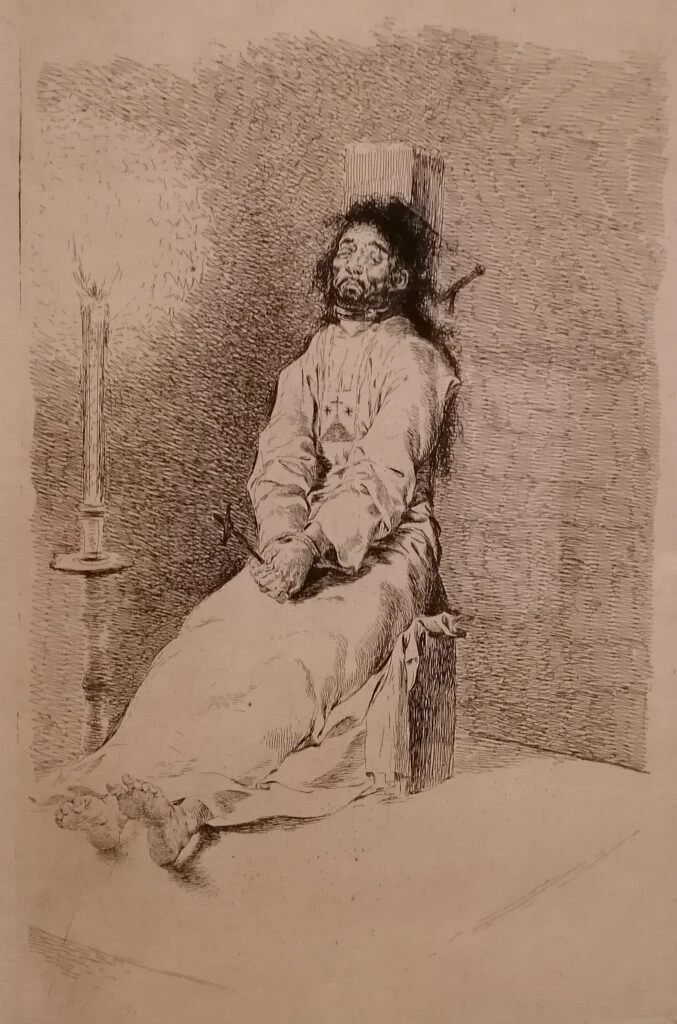
        : Francisco Goya’s high street

.

On the same day, in the afternoon, I headed to the Berggruen Museum with the desire to review the works of some beloved masters, but I found the museum closed for renovation until 2025. Fortunately, next door, at the Sammlung Scharf-Gerstenberg, there it was a small exhibition dedicated to the Caprichos and Los desastres de la guerra by Francisco Goya …

… Without looking for it (as it always should be, especially in an art world made up of preconceived intentions and concepts) the squaring of the circle appeared clear in front of my eyes … in fact, while in a small room shrouded in dim light I observe a woman locked up in prison “Because” (as the title states) “she was sensitive”, a tormentor who massacres defenseless and unarmed people (ironically called by Goya “What a Warrior!”), and then “The Garrotted man” (cruel murderous practice in use in Spain until the end of Franco’s dictatorship, 1975) with other engravings against the practice of torture, including the one under which Goya wrote “The Custody is as barbaric as Crime”, or the others by the Caprichos in which he lashes out against the clergy, the Inquisition and the social vices of his country … here, while I was reviewing all this, I remembered that three days after the “Lucientes” had put them on display in a grocery store (! ) located in a street from not a random name ( / Way of disillusionment), and on a particular day at the dawn of the new century (Ash Wednesday in 1799), the Royal militia seized them and removed  from circulation. I could not fail to mention that the Desastres were able to begin to circulate, from niche to niche, only 35 years after the artist’s death, and that his now most important works (the engravings and the “black paintings” of the Quinta del Sordo) he – for many years the official painter of the Spanish Court – made them in secret and in hiding.

Here in Berlin, as in any other European kermesse, “political” art (which does not disturb anyone) is instead well-liked at the Court, as much of the other art (decorative, conceptual, pop and so on) is well-liked by the Market, blender that manages to blend everything, especially the vacuum. Especially if it is seasoned with a thousand vanities and conformisms and kept well isolated from real life as well as from the true awareness of the dramas of the world and of life itself which is mortal, and which for this reason would require sacred attention, a profound upheaval beyond the superficial foam which constitutes the world we have built and that submerges us if the act of conscience is not triggered in us that frees us and brings us closer to others, empathically, humbly, naked, like those who after the shipwreck know how to become children or timeless ancient beings.

Everyone crowds, especially the visual artists and various courtiers, on stages that do not exist, Mayan foam, cathedrals in the desert, Paths of Deception … just as the mass of artists of the last two / three centuries has been lost in the thousand veins of painting, in retinal art or on the contrary in “pure” art, but always in the folds of a purely formal or aesthetic, hedonistic, consolatory dimension …

.

            The caves where the musician angels play

.

To Mika Akim and Julia Bilat

(and, of course, to Kirstin B. and Nicole W.)

.

What we can do, to lighten the world or the sky from its good false intentions, and ourselves, is to wander aimlessly, to lose ourselves, as Robert Walser or the Berliners Franz Hessel and Walter Benjamin have suggested … round the square then , rather than “squaring the circle”, thus relying on chance, which is then a constellation-flow mostly – from us – hidden … therefore, abandoning the ego and its vain attempt to schematize and exploit the world .. .

The day after visiting the Hamburger Banhof I discovered a lair, a cave, a refuge. Two thousand years ago it would have been called “catacomb”, in our years here in Berlin they called it “Haunt” (a word that includes the three above in italics). This quiet refuge and alternative art center is located next to Posdamer strasse (not far from where there was the infamous Nazi audodafè of books and “degenerate works of art”) and overlooks, as I discovered on arriving there, the Magdeburger Platz, a few meters from the birthplace where Walter Benjamin spent his childhood and early youth … the square (wandering without instructions) is once again rounded and without a net you can wake up, as happened to me in this place , suspended above a gravitational epicenter, above a space-time vortex …

.
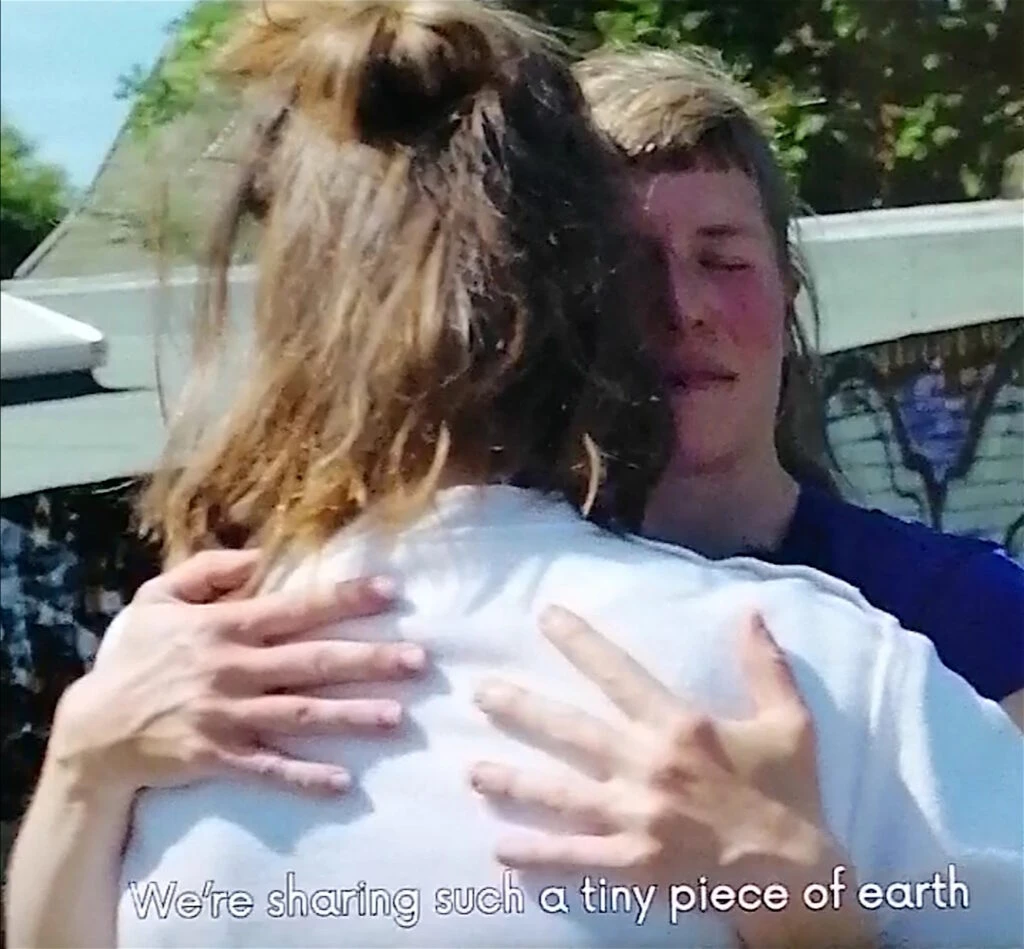
Kirstin Burkhardt/Nicole Wendel’s video

.

I rushed there attracted by the title of the exhibition-workshop by Kirstin Burkhardt and Nicole Wendel which alluded to a “real conversation”, which is not only the one between the two artists, a sign of their friendship, studded with words, signs and gestures that are launched or impress each other, but the similar constellation that here at the Haunt has involved visitors, in 45-minute sessions inside a room as if sealed. What they have experienced, first among themselves, then with visitors, is a form of “deep listening”, in which the contact of bodies and mutual listening can manifest themselves, the instinctive traces of the drawings born from dialogue, the fragments and wandering thoughts transcribed on the pages of a common diary. A practice that breaks the “safety distance” towards which they want to channel us (even in contemporary Salons); an artistic action that focuses on empathy, the real encounter between people, the idea of ​​sharing – rare gems among the many who move (egocentrically and often relentlessly) in the art world, while while these “ancient ” values ​​are mostly reduced to a sterile digital exchange for most of the inhabitants of the “civilized” earth. Theirs, however, is also a ritual, impregnated with grace, and therefore with beauty.

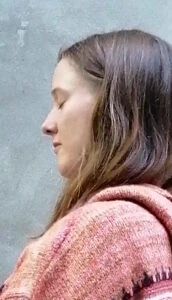
With in the eyes the blue cloth on which Nicole and Kirstin play by swinging a water bubble without letting it fall, in the “secret garden” of the Haunt a voice and a sound (those of Mika Akim) make that circle (that was square) rotate again… it is not only the grace and intensity of those Scandinavian sounds, the voice of the siderea Mika, that dissolves and re-establishes the fil rouge, but also the intensity, concentration and sharing that I saw on her face as she listened to the double bass player who introduced her concert. Visual artists would have a lot to learn from these musician angels, in which art is sharing, singing, a true common rite and the instrument they use, whatever it is, could be called “Viola d’amore” (like Mika’s one) …

Rather than then become bread for vampires (galleries, sales, public relations, utilitarianism, permanent connection, haste …), the possessed of the Salons could begin to be light, passionate and disinterested like these “tumbler”, like all the tumbler who bring the world into the world with song, dance and storytelling.
.

.

.

    Mika Akim at Haunt, before her concert

.

.

.

            The leaves, the hair, the water, the strings, the body, the clay …

.

“Follow the way of angels, not the way of vampires”.  I don’t know why but when I woke up, and for the whole day, this phrase resounded in my head from I don’t know where. I had fallen asleep and woke up listening to the cd that Julia Bilat had given me, a dear musical angel found, after Rome, under the sky of Berlin. Armed with cello and voice.

Today I return to Italy. Outside, after clear days, it is raining. Beyond the windows, between three leaves and the road, the light is gray. The study of Sandra V. d. H., where I have been sleeping in these days, appears desolate after last night the works that with their primordial song, colored and powerfully, filled the room were gone.

The pieces of the cd I’m listening to are indicated with a single word: I read “drzewo” (tree), and then “mom”, “January”, “grandmother” … And so I understand that Julia’s is a genealogical tree, a constellation that draws a territory of proximity, a network of concrete relationships that empathically strive to break any distance. What is now extremely necessary.

Her hands touch the leaves, the hair, the water, the strings, the body, the clay. Like a refabetization, after having erased gradually, on one’s own skin, all the words that have been falsified. A starting step then. Barefoot, stained with mud.

So are the new angels moving on earth today?

.
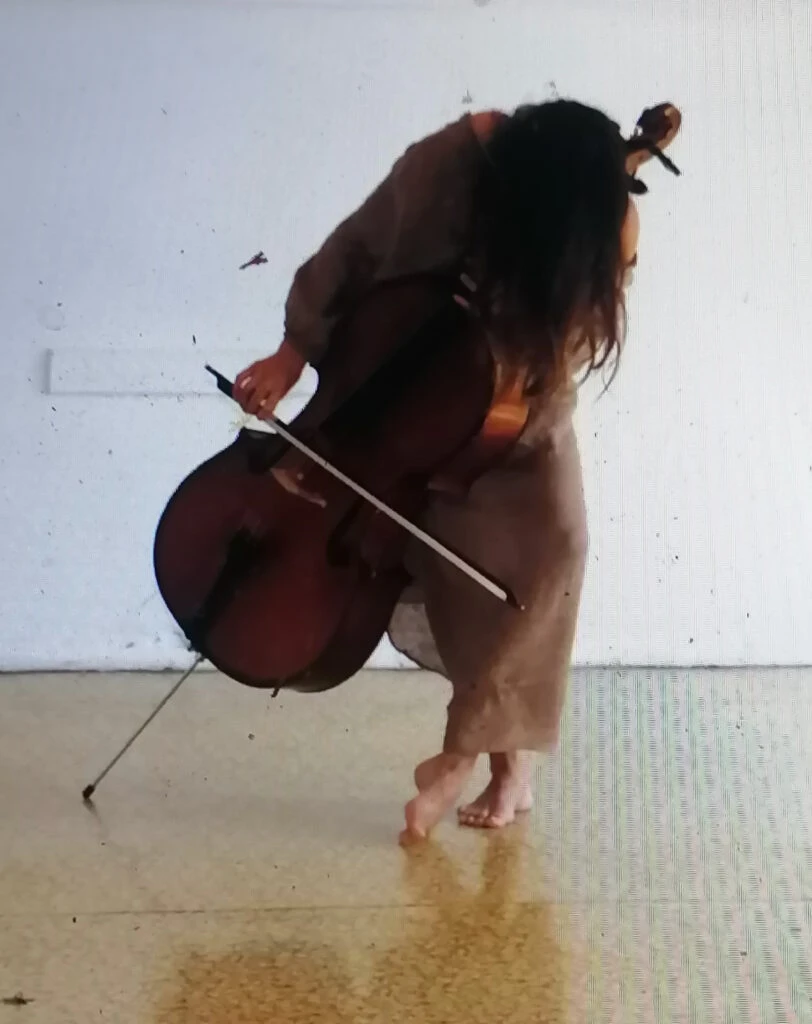
  Julia Bilat

.

A.F., Berlin / Penna in Teverina, 4/11 September 2022
7

Contrassegnato con: 12th Berlin Biennale of contemporary art, Francisco Goya, Franz Hessel, Hamburger Banhof, HAUNT Berlin, Julia Bilat, Kirstin Burkhardt, Mika Akim, Nicole Wendel, Robert Walser, Sammlung Scharf-Gerstenberg, Walter Benjamin

Spazieren in Berlin (Passeggiate per Berlino), testo di Andrea Fogli / 12th berlin biennial for contemporary art / Hamburger Bahnhof/ Francisco Goya /….

_____________
Settembre 12, 2022

.

.

 L’arte “politica” in Occidente

.

Di buon mattino mi sono diretto all’Hamburger Bahnhof, dove vi era anche un’ampia sezione della 12ma Biennale Berlinese d’arte contemporanea, e passo dopo passo in questa ex stazione trasformata da anni in mega sede espositiva all’avanguardia ho potuto toccare dal vivo lo stato dell’arte “politica” attuale.

Chi vaga per i 13.000 mq (!) in realtà non trova altro che quello che attraverso i media e internet già conosce, video di bombardamenti, la documentazione di varie criticità del Terzo Mondo ( povertà, discriminazioni razziali o di genere), e poi i problemi migratori, le torture (comprese, ben nascoste, quelle ben note made in Usa, fatte in casa o in giro per il mondo) e via discorrendo. Al di là di questo, il primo problema (artistico) è che questi temi “politically correct” che infarciscono la rassegna sono in gran parte tradotti in banali “oggetti” che – in quanto tali – non risvegliano nessuna vera reazione  o empatia: gabbie miniminalistiche, bare di cartone, un pezzo di cemento armato trovato tra le macerie dei bombardamenti, e una miriade di foto “giornalistiche” tipo quelle che intasano media e smartphone e che ormai non vediamo più, assuefatti come siamo ad ogni tipo di immagine mediatica. Come  “oggetti” (senza pathos, apatici) sono anche le varie formalizzazioni estetizzanti che troviamo lì un po’ ovunque, come il fregio giroscopico di una fetta di cielo che scopriamo (da dettagliate informazioni e statistiche lì esposte) essere quello libanese percorso da raid israeliani, o la stanza con le pareti interamente percorse da una griglia geometrizzante disegnata a matita (un’asettica gabbia di ferro?), oppure le esplosioni cromatiche e distorsioni digitali che trasfigurano l’immagine di sventurati prelevati online …

Sotto questo aspetto (formale) non vi è nulla di nuovo,  perché in queste varie soluzioni “stilistiche” è in gioco un processo che è in atto dagli anni ’60, ovvero lo svuotamento del soggetto (e della sua complessa carica umana e psichica) in favore di un’arte che – ben prima del Covid time – ha promosso la “safety distance” tra l’opera (o il mondo) e il suo autore (o il suo spettatore), invece dell’eversiva (e oggi sempre più necessaria) empatia…

Il problema però più inquietante (e tale dovrebbe essere per tutti questi artisti “politici) è che la denuncia politico-sociale  è rivolta essenzialmente oltre i confini dell’Occidente e mai affronta  quello che accade veramente dentro i confini dell’Europa (o del “Far West”), ovvero le catastrofi (per buona parte della popolazione) create dal neoliberismo e dal sistema finanziario, la sudditanza dei governi “democratici” a questo sistema economico criminale, ai produttori di armi, o alle case farmaceutiche che – come i colossi mondiali dell’e-commerce e delle tecnologie informatiche – hanno guidato (indisturbati) l’emergenza Covid a favore dei propri interessi privati. Ma non è solo questo, resta da parte anche quello che accade ogni giorno nelle nostre città e case, vicino a noi, dentro di noi : la violenza contro le donne e i bambini, il razzismo congenito e sempre presente verso generi e stranieri, la riduzione dei diritti dei lavoratori e l’aumento delle persone in stato di povertà, la trasformazione dei “cittadini” in meri consumatori, alienati e incoscienti (e quasi sempre imbambolati davanti a digitali schermi) … Per non parlare poi della crisi climatica, la grande assente, che dovrebbe essere invece al centro delle preoccupazioni di governi e di ognuno qui sulla terra … e immagino anche degli artisti “impegnati”, che se  volessero impegnarsi davvero dovrebbero allora affrontare tutti questi aspetti sottaciuti – ma forse sarebbe più utile a tutti che facessero volontariato, il giornalista o il reporter di guerra, invece dell’arte politica che sembra utile solo a loro, per cavalcare l’onda, o per evitare di cimentarsi con le arti empatiche del disegno e della scultura, e con l’empatia stessa.

.

.

 .

              : la via maestra di Francisco Goya

.

Lo stesso giorno, di pomeriggio, mi sono diretto verso il Museo Berggruen con il desiderio di rivedere le opere di alcuni amati maestri, ma ho trovato il museo  chiuso per ristrutturazione fino al 2025. Per fortuna lì accanto, alla Sammlung Scharf-Gerstenberg, c’era una piccola mostra dedicata ai Caprichos e ai Los desastres de la guerra di Francisco Goya.

Senza cercarla (come sempre dovrebbe essere, specie in un mondo dell’arte fatto di intenzioni e concetti precostituiti) la quadratura del cerchio è apparsa nitida davanti agli occhi … infatti mentre in una piccola sala avvolta nella penombra osservo una donna rinchiusa in prigione “Porque” (come recita il titolo) “fue sensible”, un aguzzino che massacra gente inerme e disarmata (chiamato ironicamente da Goya “Que guerrero!”), e poi “El agarrotado” (crudele pratica omicida in uso in Spagna fino alla fine della dittatura di Franco, 1975) con altre incisioni contro la pratica della tortura, tra cui quella sotto cui Goya ha scritto “Tan bárbara la seguritad como el delio (La prigione è barbara come il crimine)“,  o le altre dai Caprichos in cui si scaglia contro il clero, l’Inquisizione e i vizi sociali del suo paese … ecco, mentre rivedevo tutto questo, non ho potuto non ricordare che tre giorni dopo che il “Lucientes” le aveva messe in mostra in una drogheria (!) posta in una via dal nome non casuale (), e in un giorno particolare all’alba del nuovo secolo (il mercoledì delle Ceneri del 1799), la milizia Reale le ha sequestrate e tolte dalla circolazione. Non ho potuto non ricordare anche che i Desastres hanno potuto iniziare a circolare, di nicchia in nicchia, solo 35 anni dopo la morte dell’artista, e che le sue opere ora più importanti (le incisioni e le pitture nere della Quinta del Sordo) lui – per lunghi anni pittore ufficiale della Corte Spagnola – le ha realizzate in segreto e in clandestinità.

Qui a Berlino, come in ogni altra kermesse europea, l’arte “politica” (che non disturba nessuno) è invece ben voluta a Corte, come gran parte dell’altra (decorativa, concettuale, pop e via sproloquiando) è ben voluta dal Mercato, frullatore che riesce a frullare tutto, soprattutto il vuoto. Specie se è condito da mille vanità e conformismi e tenuto ben isolato dalla vita reale così come dalla vera coscienza dei drammi del mondo e della stessa vita che è mortale, e che per questo richiederebbe un’attenzione sacra, un rivolgimento profondo oltre la schiuma superficiale che costituisce il mondo che abbiamo costruito e ci sommerge se in noi non scatta l’atto di coscienza che ci libera e ci avvicina agli altri, empaticamente, umilmente, nudi, come coloro che dopo il naufragio sanno tornare bambini o esseri antichi senza tempo.

Tutti si accalcano, specie gli artisti visivi e cortigiani vari, su palcoscenici che non esistono, spuma di Maya, cattedrali nel deserto, Vie dell’Inganno … così come la massa degli artisti degli ultimi due/tre secoli si è persa nelle mille venature della pittura, nell’arte retinica o al contrario nell’arte “pura”, ma sempre nelle pieghe di una dimensione solamente formale o estetica, edonistica, consolatoria …

.

 .

              Le caverne dove suonano gli angeli musicanti


A Mika Akim e Julia Bilat

(e, ovviamente, a Kirstin B. e Nicole W.)

. 

 Quello che possiamo fare, per rischiarare il mondo o il cielo dalle sue buone false intenzioni, e noi stessi, è vagare senza meta, perderci, come ci hanno suggerito Robert Walser o i berlinesi Franz Hessel e Walter Benjamin …. arrotondare il quadrato allora, più che “quadrare il cerchio”, affidarsi così al caso, che poi è una costellazione-flusso per lo più – a noi – nascosta … dismettere quindi l’ego e il suo vano tentativo di schematizzare e sfruttare il mondo …

Il giorno dopo la visita dell’Hamburger Bahnhof ho scoperto una tana, una caverna, un rifugio. Duemila anni fa si sarebbe chiamata “catacomba”, nei nostri anni qui a Berlino l’hanno chiamata “Haunt”(parola che racchiude le tre indicate sopra in corsivo). Questo tranquillo rifugio e centro d’arte alternativo si trova accanto alla Posdamer strasse (non lontano dal punto in cui ci fu il tristemente noto audodafè nazista di libri e opere d’arte “degenerate) e si affaccia, come ho scoperto arrivando lì, sulla Magdeburger Platz, a pochi metri dalla casa natale dove passò l’infanzia e la prima giovinezza Walter Benjamin … il quadrato (vagando senza istruzioni) ancora una volta si arrotonda  e senza rete ti puoi risvegliare, come è accaduto a me in questo luogo, sospeso sopra un epicentro gravitazionale, sopra un vortice spazio-temporale …

Ero accorso lì attratto dal titolo della mostra-laboratorio di Kirstin Burkhardt e Nicole Wendel che alludeva ad una “real conversation”, che non è solo quella tra le due artiste, segno della loro amicizia, costellata di parole, segni e gesti che si lanciano o imprimono l’un l’altra, ma la consimile costellazione che qui all’Haunt ha coinvolto i visitatori, in sedute di 45 minuti all’interno di una stanza come sigillata. Quello che hanno sperimentato, prima tra di loro, poi con i visitatori, è una forma di “deep listening”, di ascolto profondo, in cui possono manifestarsi il contatto dei corpi e il reciproco ascolto, le tracce istintive dei disegni nati dal dialogo, i frammenti e pensieri vaganti trascritti sulle pagine di un diario comune. Una pratica che spezza la “safety distance” verso cui vogliono incanalarci (anche nei Salons contemporanei); un’azione artistica che mette al centro l’empatia, l’incontro reale tra le persone, l’idea di condivisione – gemme rare tra i molti che si muovono (egocentricamente e spesso senza tregua) nel mondo dell’arte, mentre sono per lo più ridotte ad uno sterile scambio digitale per la gran parte degli abitanti della terra “civilizzata”. Il loro è però anche un rito, impregnato di grazia, e quindi di bellezza.

.

  Kirstin Burkhardt/Nicole Wendel’s video

.

Con negli occhi il telo blu su cui Nicole e Kirstin giocano facendo oscillare, senza farla cadere, una bolla d’acqua, nel “giardino segreto” dell’Haunt una voce e un suono (quelli di Mika Akim) fanno ruotare ancora quel cerchio che era quadrato … non è solo la grazia e l’intensità di quei suoni scandinavi, il canto della siderea Mika, a sciogliere e riannodare il fil rouge, ma anche l’intensità, la concentrazione e la compartecipazione che ho visto sul suo volto  mentre ascoltava il contrabbassista che ha introdotto il suo concerto. Gli artisti visivi avrebbero molto da imparare da questi angeli musicanti, in cui l’arte è condivisione, canto, vero rito comune e lo strumento che usano, quale esso sia, si potrebbe chiamare “Viola d’amore” (come quello di Mika) …

Piuttosto che diventare allora pane per i vampiri (le gallerie, le vendite, le pubbliche relazioni, l’utilitarismo, la connessione permanente, la fretta …) gli indemoniati dei Salons potrebbero incominciare ad essere lievi, passionali e disinteressati come questi “saltimbanchi”, come tutti i saltimbanchi che con il canto, la danza e il racconto, mettono al mondo il mondo.

.


Mika Akin before her concert at Haunt.

.

.

              Le foglie, i capelli, l’acqua, le corde, il corpo, l’argilla …

 .

“Segui la via degli angeli, non quella dei vampiri”.

Non so perché ma al risveglio, e per tutto il giorno, è risuonata nella mia testa questa frase sbucata da non so dove. Mi ero addormentato e risvegliato ascoltando il cd che mi aveva regalato Julia Bilat, un caro angelo musicante ritrovato, dopo Roma, sotto il cielo di Berlino. Armato di violoncello e voce.

Oggi  ritorno in Italia. Fuori, dopo giorni sereni, piove. Oltre i vetri, tra le foglie e la strada, la luce è grigia. Lo studio di Sandra Vasquez de la Horra, dove ho dormito in questi giorni, appare desolato dopo che ieri sera hanno portato via le opere che con il loro canto primordiale coloravano e riempivano potentemente la stanza.

I brani del cd che sto ascoltando sono indicati con una sola parola: leggo “drzewo” (albero), e poi “mamma”, “gennaio”, “nonna” …  E così capisco che è un albero genealogico quello di Julia, una costellazione  che disegna un territorio di prossimità, una rete di relazioni concrete che cercano empaticamente di spezzare ogni distanza.  Cosa ora estremamente necessaria.

Le mani toccano le foglie, i capelli, l’acqua,  toccano le corde, il corpo, l’argilla. Come una rialfabetizzazione, dopo aver cancellato via via, sulla propria pelle, tutte le parole che sono state falsificate. Un passo d’inizio allora. A piedi scalzi, macchiati di fango.

Così si muovono oggi sulla terra i nuovi angeli?

.

Julia Bilat

.


.

A.F., Berlino / Penna in Teverina, 4/11 settembre 2022


3

Contrassegnato con: 12th berlin biennial for contemporary art, Andrea Fogli, Francisco Goya, Hamburger Banhof, HAUNT Berlin, Julia Bilat, Kirstin Burkhardt, Mika Akim, Nicole Wendel, Sammlung Scharf-Gerstenberg, Walter Benjamin

Barra laterale primaria

ricerca

Generic selectors
Exact matches only
Search in title
Search in content

INDICE/ INDEX

“Spazieren in Berlin (Stroll through Berlin)” / text by Andrea Fogli / 12th berlin biennial for contemporary art / Hamburger Bahnhof / Francisco Goya / …

Spazieren in Berlin (Passeggiate per Berlino), testo di Andrea Fogli / 12th berlin biennial for contemporary art / Hamburger Bahnhof/ Francisco Goya /….

G.AGAMBEN/G.BOMPIANI – Appello contro l’uso del Green Pass sancito dal recente Decreto Legge

In ricordo di ENRICA PETRARULO, testo per la mostra “Trincee” (2015)

ALMANACCO : JANNIS KOUNELLIS, Testo su George La Tour e frammenti d’intervista / Text on George La Tour and interview fragments // by/a cura di Andrea Fogli // italiano & english

IGINIO DE LUCA, BLITZ (azioni urbane 2010-2019 // metropolitan actions 2010-2019) // english & italiano

Young Discoveries #1 – MARIJA MASA JOVANOVICH, Bonsai Landscapes & Botanical studies 2017/2021 // english & italiano

CORNELIA LAUF – A Very Brief Text for GIAN MARIA TOSATTI march 2021 // Un breve testo per Gian Maria Tosatti //

GINEVRA BOMPIANI, intervento per la mostra “Ali di farfalla – Diari, disegni e omaggi” di M.Eustachio, M.Ferrando e A.Fogli, Biblioteca Vallicelliana, Roma, dicembre 2018// italian & english // UNPUBLISHED TEXT – TESTO INEDITO // ARCHIVIO SOCIETA’ LUNARE //

LE PERLE DI CECCO #1: estratti dagli articoli di / extracts from articles by BRUNO CECCOBELLI per/for ArtsLife, marzo 2021 // italian & english

In ricordo di LASZLO REVESZ (27.5.1957 – 11.3.2021), alcuni scritti pubblicati sul suo website…

ANTONIO ZIMARINO, Aforismi – via facebook – sull’arte contemporanea // italian & english

ANDREA FOGLI, Immaginare oggi un museo (primi spunti) in margine a “Le Musée et son Double” / Philippe Van Cauteren – SMAK Gent

ANDREY VRABCHEV , MEMORIAL (2020) & MONUMENT FROM FUTURE (2019)

STEFANO MINZI, LA MATRIARCA, febbraio 2021

GIUSEPPE CACCAVALE , « Projet Paul Celan », Residence Concordia, Parigi gennaio-ottobre 2020; testo e foto dell’artista.

ANYA BELYAT-GIUNTA / ERICH GRUBER, Un intimo dialogo a distanza/ AN INTIMATE DISTANCE DIALOGUE, 2020-2021

VIDEO: Ugo Giletta / Filippo Bessone : “Bello era…”, gennaio 2021

VIDEO : Anything to say? (#FreeAssang) di DAVIDE DORMINO

DAVIDE DORMINO, Anything to say? – A monument to courage, 2015-2020, Berlino, Parigi, Strasbourg, Ginevra, Bruxelles, Colonia…

ALMANACCO “QUANDO LA CASA BRUCIA” (Anteprima): GIORGIO AGAMBEN (passi dal libro “QUANDO LA CASA BRUCIA” , Giometti & Antonello, Macerata, novembre 2020)

SABINA MIRRI, “Gonna be a cult character / Tell me more”, 18 febbraio – 13 dicembre 2020, Roma, Galleria Alessandra Bonomo (con nello “Studiolo” opere di Sandro Chia e Verde Edrev)

BERNARDí ROIG – La Cabeza de Goya, 2020 / mostra alla Galerie Klüser, Monaco (26 Novembre 2020 – 27 Febbraio 2021) / (español, italiano, english) /

ELZEVIR, Rochers à Ouessant, 2018/2020 / Elzevir Rochers / Elzevir France /

BRUNA ESPOSITO | Altri Venti – Ostro, 2020 / in mostra da Stefania Miscetti , Roma (ottobre 2020- gennaio 2021)

TELEGRAMMA DALLE FIANDRE #5 di Patrick Lateur – con una foto di Koen Broucke (in italiano, fiammingo e inglese) – Patrick Lateur Belgio – www.patricklateur.be

JANNIS KOUNELLIS – due frasi scelte per il prossimo “Almanacco” di Diario Comune #6 (anteprima)

NINA KOVACHEVA & VALENTIN STEFANOFF,  “Paradise is Temporarily Closed. God ”, 2020.

ANDREA AQUILANTI, installazione per “UN’OPERA, UN ARTISTA, UN MESE”, Roma novembre 2020 / Andrea Aquilanti Roma / Andrea Aquilanti installazione / @andreaaquilanti

DIARIO DI BAGIGIAS # 4 , giugno – ottobre 2020

Omaggio a Ettore Spalletti

MARINA PARIS , Archivio degli spazi, febbraio 2020

UGO GILETTA, Souvenir di Heike Curtze

ANDREA FOGLI, “Figure senza nome”, giugno 2020 (con traduzione in fiammingo di Patrick Lateur))

TELEGRAMMA DALLE FIANDRE #4 di Patrick Lateur, con “Nascita di Venere” di Felice Levini

CONTRAPPUNTI #3, di Benoit Angelet, Parigi, 10.6.2020, con i disegni di Regnier Angelet

TI DO TODI #1, di Matteo Boetti, “1-5-20”, Todi.

DIARIO DI BAGIGIAS # 3 , maggio 2020

MARCO TIRELLI. “We are the crowd…”, aprile 2020

LE LETTERE DI TIRESIA # 4 di Fabrizio Sabelli, con installazioni urbane di Fausto delle Chiaie

VALENTIN STEFANOFF, We The Poor of This World, 2013, Video, 6,50 min

CONTRAPPUNTI #2, di Benoit Angelet, Parigi, 16.5.2020

GREETINGS from Nuremberg, di Fredder Wanoth, marzo-aprile 2020

BERNARDI ROIG / Ejercicios para un tiempo clausurado Nº2 : Compartir el lugar (la cabeza)

LE LETTERE DI TIRESIA # 3 di Fabrizio Sabelli, con “Struttura di una nuvola”, 1964, di Antonio Sanfilippo

“DANCING POPPIES”, foto di Rurik Dmitrienko, 13.5.2020

CONTRAPPUNTI #1, di Benoit Angelet, Parigi, 11.5.2020

TELEGRAMMA DALLE FIANDRE #3 di Patrick Lateur, con “Protection circles” di Laszlo Revesz

MERENDA/ SNACK TIME, un racconto di Chiara Nuvoli, aprile 2020

KRISTIN JONES, “TIMESCAPES”,2001-2020, video; musica di Walter Branchi

ARTISTI / ARTISTS

Koen Broucke / John Berger / Enrica Basilico / Ettore Spalletti / Pierluigi Fresia / Michael Ziegler / Kirstin Burkhardt / Benoit Angelet / Antonio Sanfilippo / Bernardi Roig / Diario #1 / 12th Berlin Biennale of contemporary art / Patrick Lateur / marcus raetz / Fredder Wanoth / Felice Levini / Bernd Koller / Maria Bussmann / Mika Akim / Cristina Falasca / Serge Uberti / Bruno Ceccobelli / Andrea Aquilanti / Xavier de Maistre / Video / Kristin Jones / Nina Kovacheva / Nicole Wendel / Ugo Giletta / Jeanette Zwingenberger / Marco Tirelli / Sammlung Scharf-Gerstenberg / Sélène de Condat / Judith Lange / Lettere / Lorand Hegyi / Petra Richar / Marine Joatton / Marco Mariani / Walter Branchi / Julia Bilat / 12th berlin biennial for contemporary art / Elzevir / Stefano Minzi / Franz Hessel / Francisco Goya / Anke Armandi / Gianluca Codeghini / Andrea Fogli / Laszlo Revesz / Fabrizio Sabelli / Marina Paris / Robert Walser / Regnier Angelet / bagigias / Marilù Eustachio / Matteo Boetti / jannis kounellis / Walter Benjamin / Hamburger Banhof / Luis Sepulveda / HAUNT Berlin / Rurik Dmitrienko / Lois Weinberger / Valentin Stefanoff / Erich Gruber / Cécile Vandresse / Chiara Nuvoli

Copyright Diario Comune © 2022